
Ailo Integrated Payments System
I led the design effort that researched, conceptualised, and delivered an integration between trust accounting and Ailo Pay that allowed Ailo to not re-start onboarding customers — paused at 10k properties under management, reaching its 110k+ properties under management as of December 2025 — but also enabled the company to finally charge its SaaS fee to customers.
What is this integrated payments system?
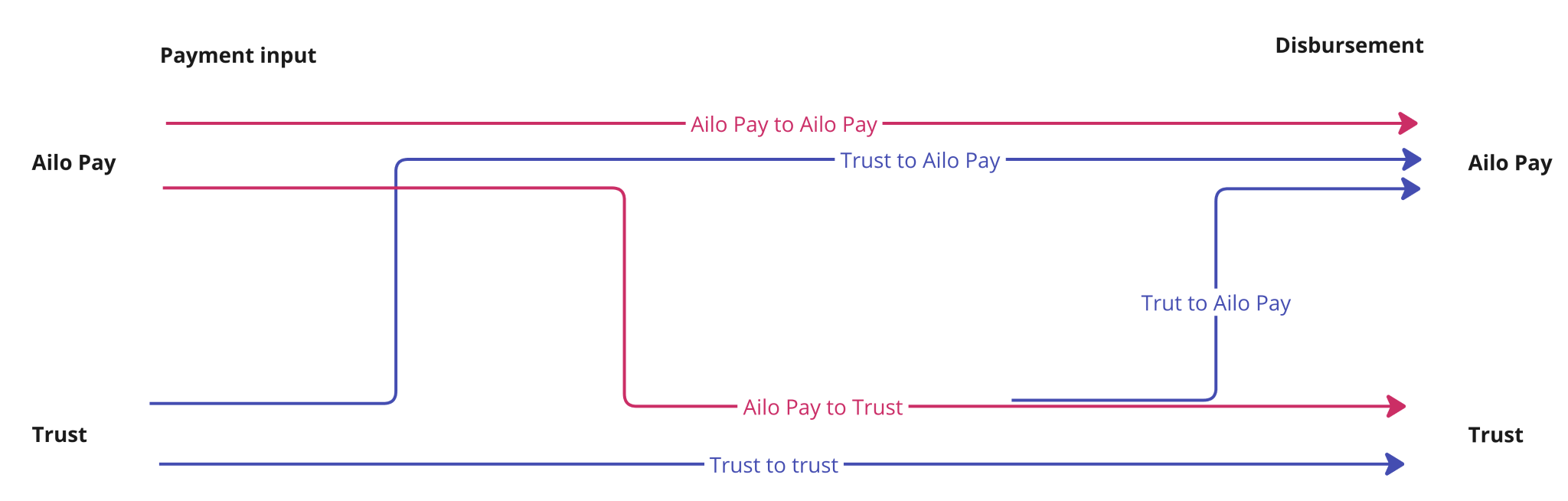
Ailo provides a system that integrates Ailo Pay (Ailo’s original “trustless” streamlined payments between tenants and landlords wallets) with the traditional trust account managed by real estate agencies. It has allowed Ailo to onboard customers faster, with less friction, and for greater flexibility, addressing a myriad of payment scenarios and needs from real estate agencies, government bodies, tenants, and landlords, that were previously impossible or extremely complex to handle.
The challenge
By the end of 2021, Ailo had delivered a “trustless” payment system (Ailo Pay), allowing payments from tenants to landlords to be streamlined and not having to flow through real estate agencies’ trust accounts. That was a great value for agencies as they saved money with audits, had less work to do not having to do daily reconciliations, and had a diminished risk of fraud. It also allowed landlords to access their funds earlier and faster as well as suppliers getting paid earlier.
The problem was that Ailo Pay couldn’t handle all scenarios necessary to scale the company up. Only a handful of agencies, depending on their practice and location, were able to fully ditch their trust account. Others were caught in between with part of their rent roll paying through Ailo Pay, and a different part with funds managed via the agency’s trust account. The value propositions of “one system” and a “trustless system” wasn’t being delivered, Ailo couldn’t scale, many customers were unhappy, and the onboarding of new customers was painful and all but paused at 10,000 PUM (properties under management). It also meant Ailo couldn’t charge its SaaS fee as envisioned, relying only on transaction fees. Dealing with a trust account was a necessity.
The process and effort
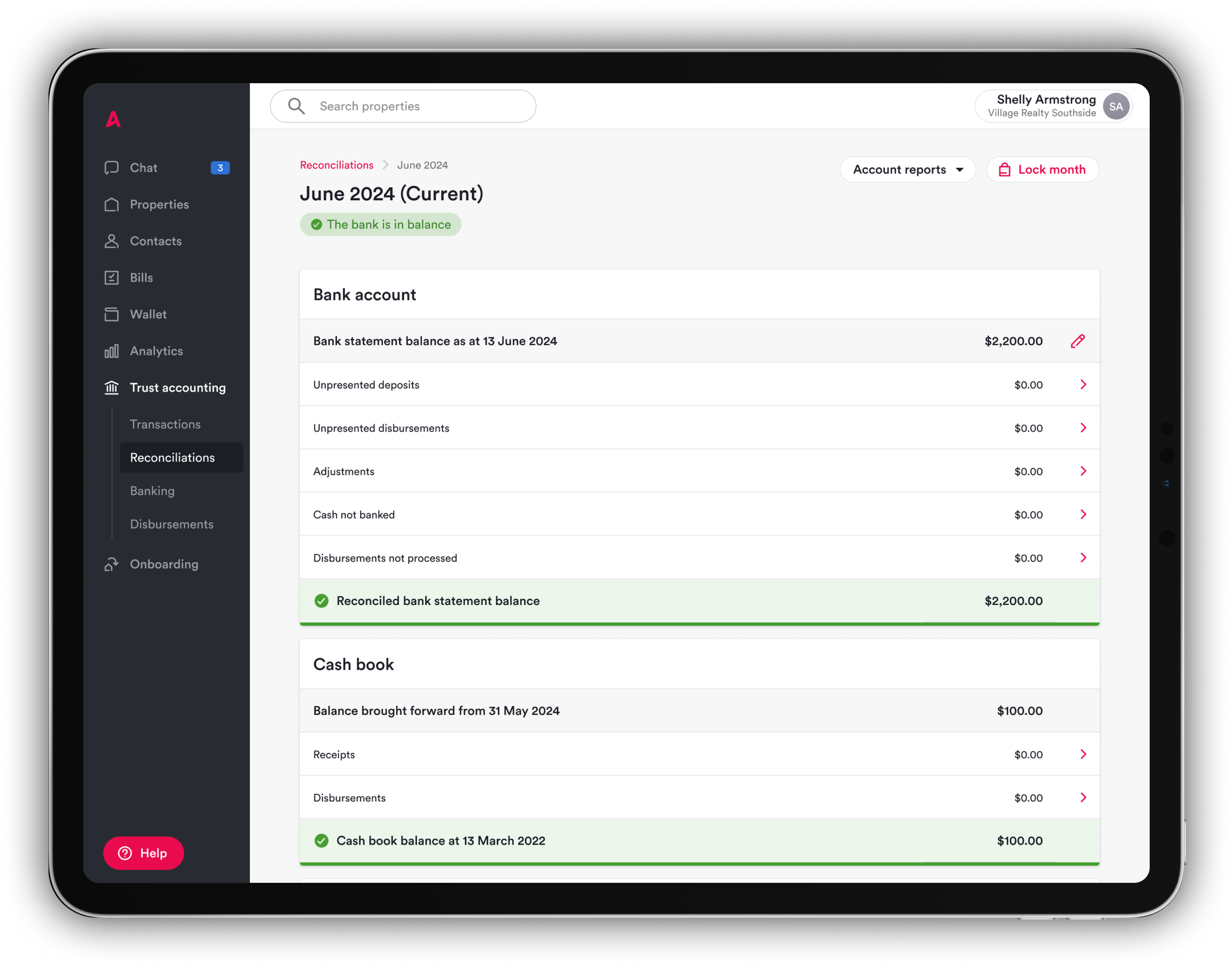
The effort required us to first understand what was needed, investigate different potential solutions, dozens of user stories, regulation and auditing requirements. We refactored of many services, built a general ledger, and designed user and work flows. I coordinated research, design and testing across a “super” squad with 5 lead engineers and three other supporting squads, adding 4 product designers, 3 product managers, 7 lead engineers, and 6 other engineers.
During the process we explored different solutions, consulted with property managers, auditors, and lawyers. We learned accounting and all the flows necessary and have countless reprioritisation sessions between myself, the main engineer, and the main product manager, to address changes in requirements and goals from the business .
The outcomes
Growth of PUM (properties under management) by 1,000% since release — stagnant and paused before
Staged release of different flows, allowing Ailo to get back to onboarding and increase in revenue before addressing other priorities from the full release
Created a foundation for dealing with regulatory risk that Ailo could be exposed to if the work wasn’t done
Countless hours investigating accounting flows, consulting with subject matter experts, and validating concepts and designs with users, auditors, and lawyers